- Article
- International
- Setting up overseas
Why businesses can find their next growth market in Southeast Asia
Ambitious businesses looking to expand in Southeast Asia will find the region offers strong regional connectivity and compelling opportunities across a range of industries.
The dynamic network of economies in Southeast Asia presents a rare combination of scale, diversity and proven economic resilience.
Combined GDP across the 11-member ASEAN bloc exceeds USD3.9 trillion, while the total population is approaching 700 million people.1 Annual GDP growth in five of the six biggest economies in the region ranged between 4% and 8% in 2025, well above the global average despite an uncertain global environment.2
Southeast Asia is also increasingly important in global trade, with numerous regional and bilateral free trade agreements in place. Its strategic location at the heart of Asia provides access to some of the most dynamic corridors in the global economy, including to China and India, or to the Middle East. As trade flows shift, the region’s appeal as a lever for diversification, supply chain resilience and growth is only becoming more important.
Diverse appeal
Southeast Asia’s diversity is a key part of its appeal: the region’s major economies have much to offer for international businesses across a broad range of industries.
For businesses looking to expand into Southeast Asia for the first time, Singapore provides an attractive, stable and relatively low-tax base for a regional headquarters, with strong legal protections and an English-language ecosystem.
A recent HSBC survey of 2,700 international businesses in 18 markets globally underlined the appeal: Singapore ranked as the most desirable market for expansion among the markets surveyed.
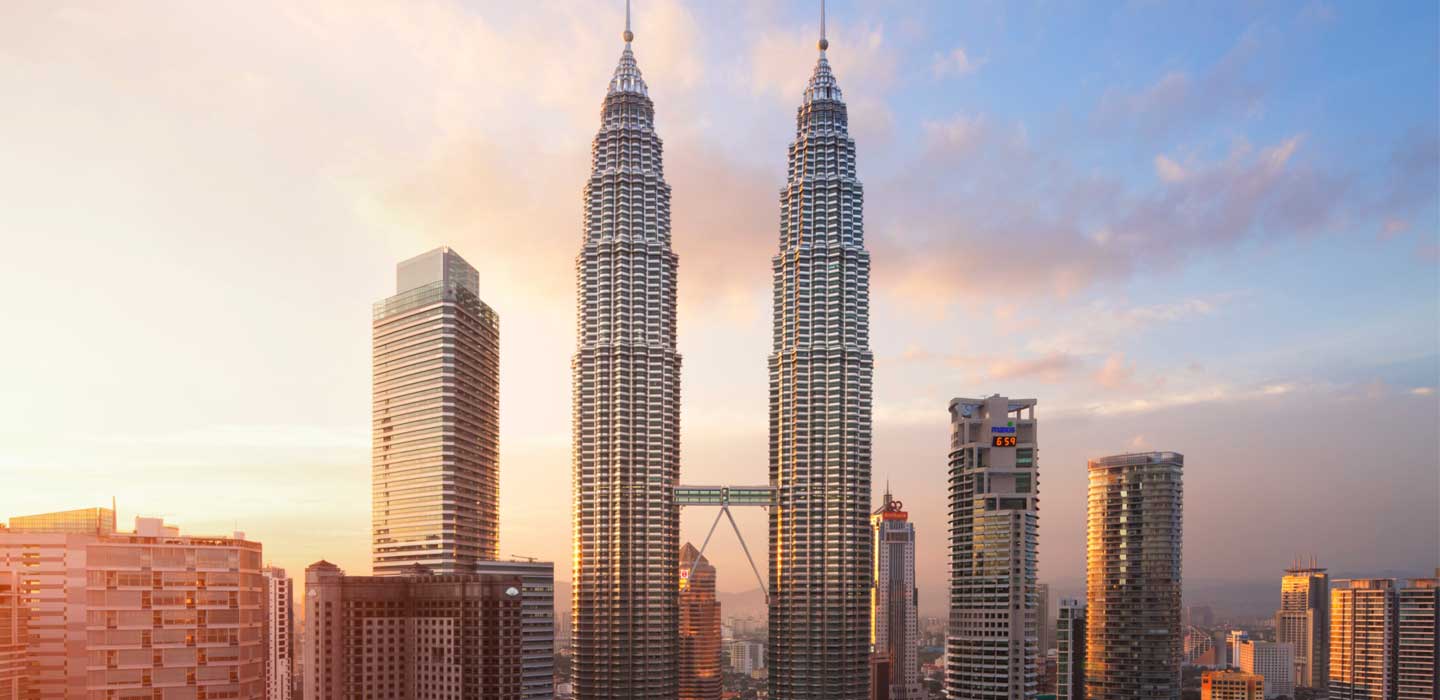
Neighbouring Malaysia offers a strong institutional framework and a well-developed financial sector, and continues to welcome international investment, especially in technology and digital supply chains.3 Indonesia, the region's largest economy, presents a vast and fast-growing domestic market that is becoming increasingly accessible to foreign entrants.4 The Philippines also boasts a young, English-speaking workforce and is opening up various sectors to stimulate foreign investment.5
Thailand, meanwhile, is building on its traditional strengths in manufacturing and tourism with investments in digital infrastructure.6 Vietnam is fast emerging as a manufacturing and export powerhouse, drawing sustained investment into processing and industrial capacity on the back of some of the fastest GDP growth in the region.7
While trade and business connections are strong across the region, its rich cultural diversity can also present challenges that require sensitivity and flexibility.
Facilitating regional payments
Governments in Southeast Asia have made cross-border payments a priority and have established an interlinked network of real-time payment systems reducing frictions for real-time retail transactions. Wholesale cross-border payments, however, remain complex and slow.8 Businesses with operations in multiple markets need to plan carefully.
With an on-the-ground presence in Indonesia, Malaysia, the Philippines, Singapore, Thailand and Vietnam – the six largest markets in Southeast Asia – HSBC can help clients navigate this multicultural region by advising on appropriate operating models.
Our sophisticated treasury offerings help companies across the region optimise their operations and control costs. In much of the region, clients can also benefit from our single connected digital banking platform that can support needs across trade, FX and cash management, although such offerings may be subject to local regulatory restrictions and not all cross-border transactions can be facilitated on digital banking platforms.
HSBC can call on an extensive network of specialists in cash, trade, FX and capital financing across Southeast Asia to help businesses implement cross-border solutions covering cash pooling, payments and collections and FX management. Our offering includes 30 notional pools and 240 cash concentration structures covering 10 currencies, and we handle more than 4 million API calls each year.
On payments, HSBC’s connections to local infrastructure bring powerful advantages to clients looking for smooth operations in-market.
In Singapore, HSBC has direct access to MEPS+, the country’s wholesale real-time gross settlement system (RTGS), as well as the retail-targeted FAST service, both allowing instant SGD payments. And with the expansion of our Digital Merchant Services platform into Singapore in 2025, our platform in the country now supports 14 different payment methods, processing more than 1 million cross-border transactions for corporate clients each year.
HSBC also has direct access to PESONet and InstaPay in the Philippines. In Malaysia, HSBC supports real-time payments by enabling customers to send and receive instant transfers via DuitNow, as well as high-value payments through the real-time gross settlement system RENTAS. In Thailand and Vietnam, we have direct access to all major local clearing systems. In Indonesia, HSBC’s digital banking platform supports all local payment channels required by corporate clients, ensuring they can handle high-value, low-value and real-time payments (RTGS, SKN and BI-FAST).
A treasury champion
Across Southeast Asia, our sophisticated treasury solutions ensure smooth operations for companies across a range of accounts and currencies. In Malaysia, for example, HSBC offers integrated multi-currency pooling across MYR, USD, SGD and RMB.
In Thailand, businesses like Thai Union use HSBC’s liquidity solutions to automate bi-directional cash sweeping between its headquarters and its subsidiaries in the US and Europe. HSBC’s digital banking solutions have supported the global seafood leader's international operations for over three decades, helping it pursue cross-border opportunities and establish a global presence.9
HSBC’s capabilities in the region are reflected in the scope of our client base. Our range of customised solutions across treasury and process optimisation, risk, and working capital management support many regional headquarters and regional treasury centres, helping them to identify and manage their risk exposures.
We support more than half of the Fortune 500 companies that operate in the Philippines, and more than 60% of inbound multinational corporations doing business in Vietnam and Indonesia.
HSBC has helped enable regional solutions in ASEAN for some of the world’s biggest and most innovative companies. We facilitated the expansion of a major global energy company into Singapore through our treasury and cash management solutions.
Our local market expertise also helped a global engineering company to establish a presence in Singapore, and we also supported the expansion across Southeast Asia of a regional super-app platform with cash management, FX and treasury solutions that enable clients to scale operations in new markets.
We also have leading capabilities in many of the most important sectors for the region, including business process outsourcing (BPO) and the global capability centre (GCC) segment in the Philippines.
In Indonesia, our dedicated expertise in sectors such as consumer goods, natural resources, healthcare and telecoms media and technology (TMT) make our offering particularly relevant to the country’s highest profile industries.
Expanding trade corridors
For businesses operating or trading across borders in Southeast Asia, our industry and trading corridor specialists can provide valuable advice and support.
Our local China desks across Southeast Asia provide seamless coverage and service, with Mandarin-speaking bankers able to support inbound investment and trade flows from China.
Often the challenge for a new entrant into an ASEAN market is navigating the trade relationships that are needed to help business to flourish. In Indonesia, for example, HSBC facilitates FDI flows by leveraging its membership of international chambers of commerce, connecting multinational corporate capital to the country’s investment landscape through its work with EuroCham Indonesia10, BritCham Indonesia11 and AmCham Indonesia12.
It’s just one of the ways in which clients can profit from our longstanding presence in the region, providing them with the resources and advice to make the most of their ambitions as they expand into one of the most exciting trade and business regions of the world.
Sources
[1] https://data.aseanstats.org/
[2] https://data.imf.org/en/datasets/IMF.RES:WEO
[4] https://investinasia.id/blog/indonesia-positive-investment-list/
[5] https://boi.gov.ph/dti-boi-palace-approves-2026-sipp-to-accelerate-high-impact-investments/
[7] https://vir.com.vn/vietnams-realised-fdi-reaches-five-year-high-in-first-half-156057.html
Disclaimer
© Copyright 2026, HSBC Bank plc, ALL RIGHTS RESERVED. No part of this publication may be reproduced, stored in a retrieval system, or transmitted, on any form or by any means, electronic, mechanical, photocopying, recording, or otherwise, without the prior written permission of the issuer of the report.
Want to know more?
HSBC's Business of Expansion report dives deep into how companies are adapting in the current climate.