- Article

- Infrastructure and Sustainable Finance
- Innovation
Globalisation of Climate Tech: A defining growth opportunity of our generation
The world has entered a new era of industrial transformation — one defined by the global retooling of economies for a low-carbon future. This isn’t a niche investment theme; it’s a reallocation of capital, resources, and innovation on a scale unseen since the mid-20th century industrial boom.
The opportunities are vast: cleaner power, efficient grids, low-carbon fuels, sustainable materials, and circular manufacturing systems. Together, these sectors are projected to attract more than $150 trillion in cumulative investment by 20501. But beyond the numbers lies something more fundamental — a convergence of energy security, industrial strategy, and climate action ambition that’s defining the next decade of global growth.
Why the global opportunity matters
For the first time, global economies are competing to industrialise sustainably. The level of venture investment in Europe is now on a par with the United States, with Europe leading in project deployment for sectors such as low-carbon cement, long-duration energy storage, and advanced nuclear. India’s innovation engine is accelerating — the country recorded more climate tech IPOs in the past year than the US and Europe combined2, proof that its startup ecosystem can deliver both scale and exits. Meanwhile, MENA and Latin America are gradually exploring opportunities beyond exporting hydrocarbons and raw materials, tapping into production of green ammonia, sustainable fuels, and minerals.
This diversification of innovation and capital is no coincidence. More governments across emerging markets are aligning goals with economic imperatives: the UAE’s Masdar initiative and its portfolio of gigawatt-scale solar and wind projects are positioning the Middle East as a global renewables hub; India’s $2 billion Hydrogen Mission is seeding industrial decarbonisation; and Singapore’s $3.9 billion Future Energy Fund is driving next-generation energy systems. Development banks in Latin America and the European Investment Bank’s €1 trillion climate budget are catalysing private finance. Together, these initiatives signal a simple truth — climate tech is not just an environmental agenda; it’s a growth agenda.
Why now?
Three forces are converging to make the 2020s the decisive decade for climate innovation:
Economics: Clean technologies are achieving cost parity faster than expected. Solar and wind are the cheapest forms of energy in most markets, while green hydrogen and carbon capture are moving down their cost curves. In Europe, the end of free carbon allowances and the introduction of the Carbon Border Adjustment Mechanism (CBAM) are tilting industrial economics decisively toward low-carbon production.
Policy alignment: Strong frameworks are replacing weaker fragmented incentives. Now, emerging economies are bringing forward new initiatives and policy frameworks that fit their own needs, like reducing electricity bottlenecks - from India’s grid expansion programmes to interconnection projects across Central America and innovative financing through sovereign green bond markets in Asia and Latin America.
Capital mobility: Investors are looking beyond traditional markets. Institutional and sovereign funds are diversifying, toward markets with clear regulatory signals. Sightline data shows that Europe’s venture funding gap with the US has almost closed, while regions like MENA and LatAm posted double-digit growth in climate tech funding last year2. The pipeline of investable opportunities is deepening fast — and it’s increasingly global.
The decade of deployment
The next phase of the transition is about deployment at scale, transforming prototypes and pilots into pipelines and power plants. Success will depend on aligning three pillars: finance, infrastructure, and policy.
Governments need to accelerate permitting and grid development; investors must provide patient, catalytic capital; for corporates to follow, commercialising proven technologies and anchoring offtake demand.
Nowhere is this more urgent than in markets where climate resilience and energy access are intertwined. Electrifying transport in India, building circular manufacturing in MENA, or decarbonising cement in Europe all share one constant: the need for partnership between public ambition and private execution.
From innovation to infrastructure
The story of globalisation in climate tech is ultimately one of opportunities to grow industries, secure resources, and help to stabilise the planet. Yet, the path to global deployment is not without friction. Regions with the strongest pipelines face persistent bottlenecks — from permitting delays in Europe, to fragmented supply chains in emerging markets, to interconnection queues that slow the rollout of renewables in both the US and EU. The markets that become leaders and navigate these challenges, will be those that treat climate innovation as an economic strategy at the core of future infrastructure, not just part of corporate responsibility.
HSBC has an important role to play: connecting investors and companies to global markets, providing the capital required to scale, and ensuring customers access the technologies and resources needed to meet net-zero. HSBC Innovation Banking provides full-service global banking for high-growth companies and investors, offering tailored debt solutions that scale from seed stage trough to IPO and beyond.
For 160 years HSBC has been a bank of industry and entrepreneurs. We connect clients with our network across more than 50 markets helping to ensure that climate tech projects and future innovators we support can succeed in the complex global landscape.
The next generation of industrial champions is being built now. Their factories may be in India, their investors in London, and their customers in São Paulo — but their mission will be shared: to turn global capital into sustainable impact.
The world is ready and moving from development to deployment.
- Boston Consulting Group (BCG), “Private Capital and the Climatree Opportunity in Europe”
- Sightline Climate, “Globalization in Climate Tech”
Further insights

Globalization in Climate Tech
A Sightline Climate report, sponsored by HSBC Innovation Banking, which explores the latest trends in the globalisation of climate tech, backed by Sightline’s data and research.
More resources

Supply Chain Finance
Take a deep dive into the articles covering key themes and topics which have been discussed at the summit. Learn more. Infrastructure and Sustainable Finance.
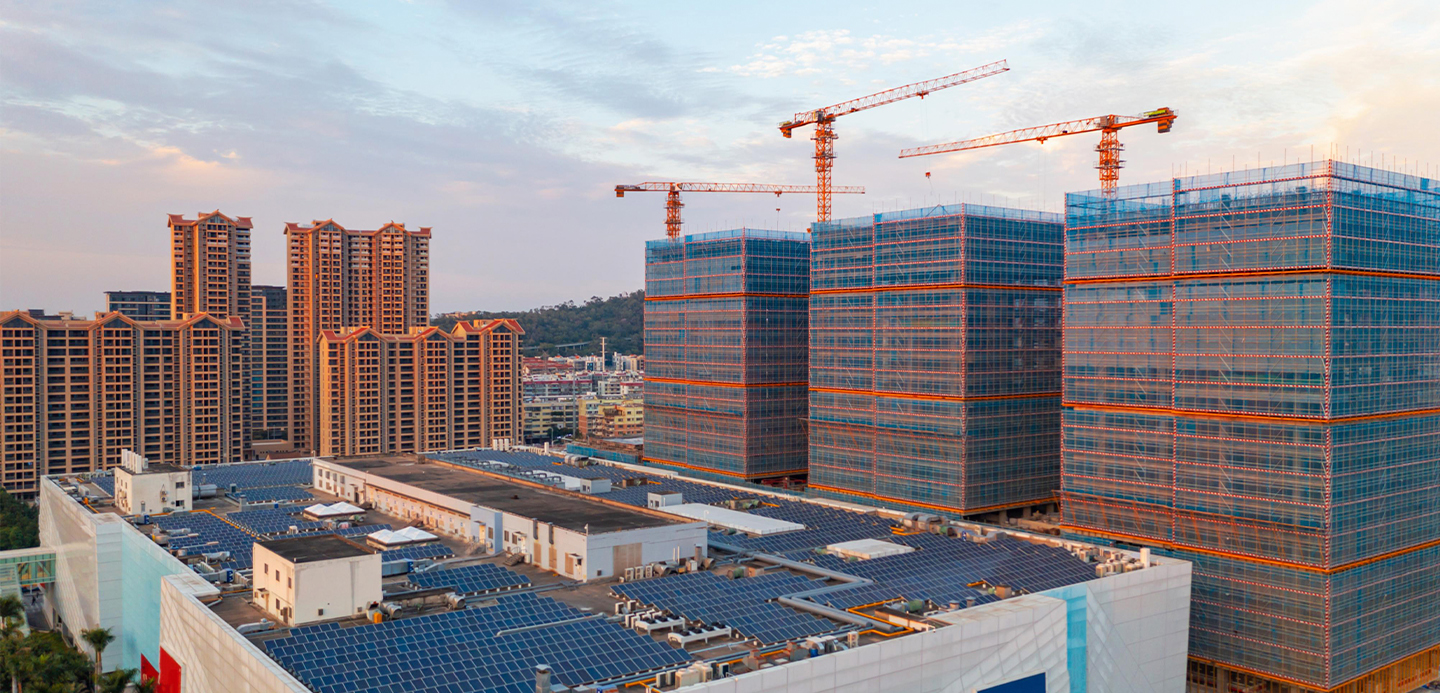
How climate tech innovation is transforming the built environment
Corporate real estate developers and managers face rising costs, as well as challenging emissions reduction targets. Innovative start-ups offer a new wave of solutions.

Financing renewable energy and role of multilateral institutions
Renewable energy is more appealing today because it is the cheapest energy source, not just because it is green. But funding projects still carry risks, and that is where multilateral financial institutions can help.