- Article

- Innovation & Transformation
- Digital Adoption
2026 Economic Outlook: Impact on Treasury
Agility, learning and resilience in an era where uncertainty is the only constant
Uncertainty has become the defining feature of the global economy. As the payments landscape transforms faster than ever, corporate treasurers are being called to reimagine how they operate, not simply to protect balance sheets but to enable growth, resilience and competitive advantage.
A complex global backdrop
The world enters 2026 still navigating the aftershocks of trade fragmentation, shifting rate cycles and uneven growth, according to HSBC Global Investment Research. Tariffs continue to dominate the economic landscape. While many economies already know the rates their exports will face entering the US, the extension of sector-specific tariffs will keep uncertainty high.
That poses a dilemma for American companies, unsure of import costs, and for global exporters, who may see weaker US demand. The key question for 2026 is whether US consumers will keep spending despite softer labour-market confidence and renewed inflation from tariffs. The Federal Reserve’s rate cuts through late 2025, and possible modest easing this year, should cushion activity, but business visibility remains low.
Elsewhere, trade dynamics are mixed. Mainland China faces a sharper slowdown as exports fall and domestic investment weakens, while further stimulus aims to stabilise consumption. Europe’s recovery is hesitant: lower inflation and solid labour markets should deliver modest growth, though scars from the cost-of-living crisis linger. HSBC’s economists expect a gentle acceleration in activity, depending on how rate cuts and wage gains translate into spending.
Globally, inflation is likely to stay contained. Lower energy prices and easing supply bottlenecks give central banks room to remain accommodative. Yet risks persist, from uncertainty over the new Federal Reserve chair to geopolitical tensions and fragile fiscal positions, even as investment in AI, digital infrastructure and clean technologies could lift productivity on the upside.
What this means for treasurers
Against this backdrop, treasurers face a familiar mandate: deliver more value with fewer resources in a world where volatility is the baseline. Rising complexity, compressed margins and growing business demands are pushing treasury teams to evolve, not only to be strategic partners but to learn and adapt faster than the cycle itself.
Agility and insight now matter as much as efficiency. The unpredictability is daunting, but it also creates space for treasurers to evolve, using data, automation and payments innovation to drive growth and resilience rather than simply mitigate risk.
Businesses and treasurers that prepare for volatility will be the ones who thrive. The most effective treasuries in 2026 won’t just plan for uncertainty — they’ll build the agility to adapt at speed, with data and insight at the core of every decision.

Manish Kohli
Head of Global Payments Solutions, HSBC
Growth, therefore, cannot be reactive. Treasuries must be built for agility across the world’s largest trading corridors, able to adapt to dynamic shifts in tariffs, sanctions and capital controls. Payments optimisation, real time liquidity management and automation are emerging as the pillars of that resilience.
Where priorities converge
HSBC’s Treasury Pulse Survey, capturing the views of more than 500 companies across 33 countries, reveals a clear hierarchy of priorities. Over half (53%) of treasury teams cite operational cost reduction as their top business goal, followed by lowering financing costs (50%) and adopting new technologies (48%).
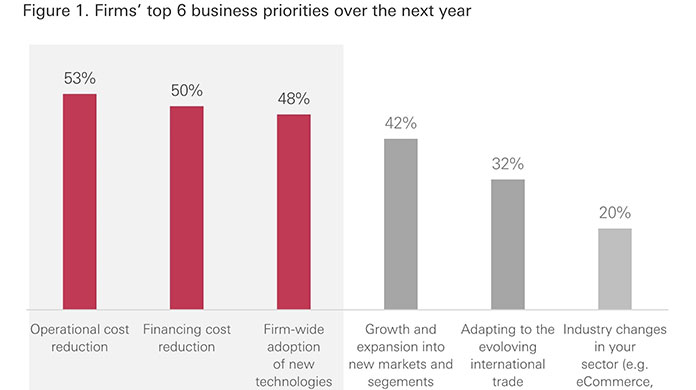
More than half of treasuries operate with fewer than ten full-time staff worldwide. Despite growing complexity, resources remain stretched, intensifying the need for smarter systems and structures. From these findings, four focal areas emerge as essential to reimagining treasury operations in 2026: digitisation and automation, centralisation, capital efficiency and payments modernisation.
Treasury excellence is built on faster decisions, smart automation and optimised banking relationships. The leading treasuries will be those that embrace next-gen technologies and collaborate with providers that simplify global delivery, offer proactive solutions and support their digital transformation journeys.

Michael Roberts
CEO of Corporate and Institutional Banking, HSBC
1. Harnessing technology and digitisation
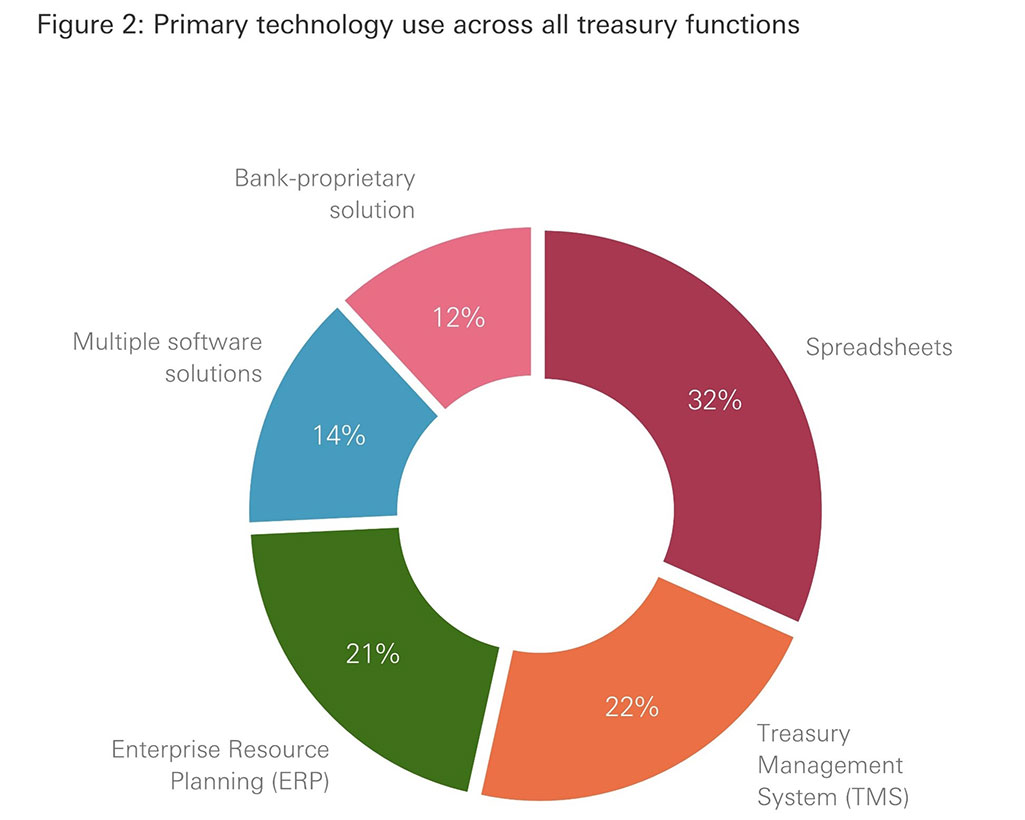
Efficiency starts with technology. Many treasuries still rely heavily on manual processes, with spreadsheets accounting for roughly a third of activity and more than half of cash-flow forecasting. Automation across core functions averages only 48%, leaving vast room for improvement.
Actions for Treasury to consider
- Define the benefits of automation in measurable terms, for example, reduced processing time, lower error rates or higher forecasting accuracy. These will support your business case.
- Establish a data review cycle to ensure data is accurate, structured and compliant with internal policies. Implement a simple data-governance checklist.
- If not yet API-enabled, start the conversation with your banking partners about enhancing your connectivity.
2. Pay-off to centralisation
Centralisation complements automation. Rationalising bank accounts and relationships cuts costs and boosts visibility. Survey modelling shows that treasuries with high automation and centralisation achieve efficiency gains of up to 70%. Those with optimised structures spend roughly 55% of their time on daily operations, compared with 63% for peers with fragmented systems, freeing capacity for forecasting, risk management and investment decisions.
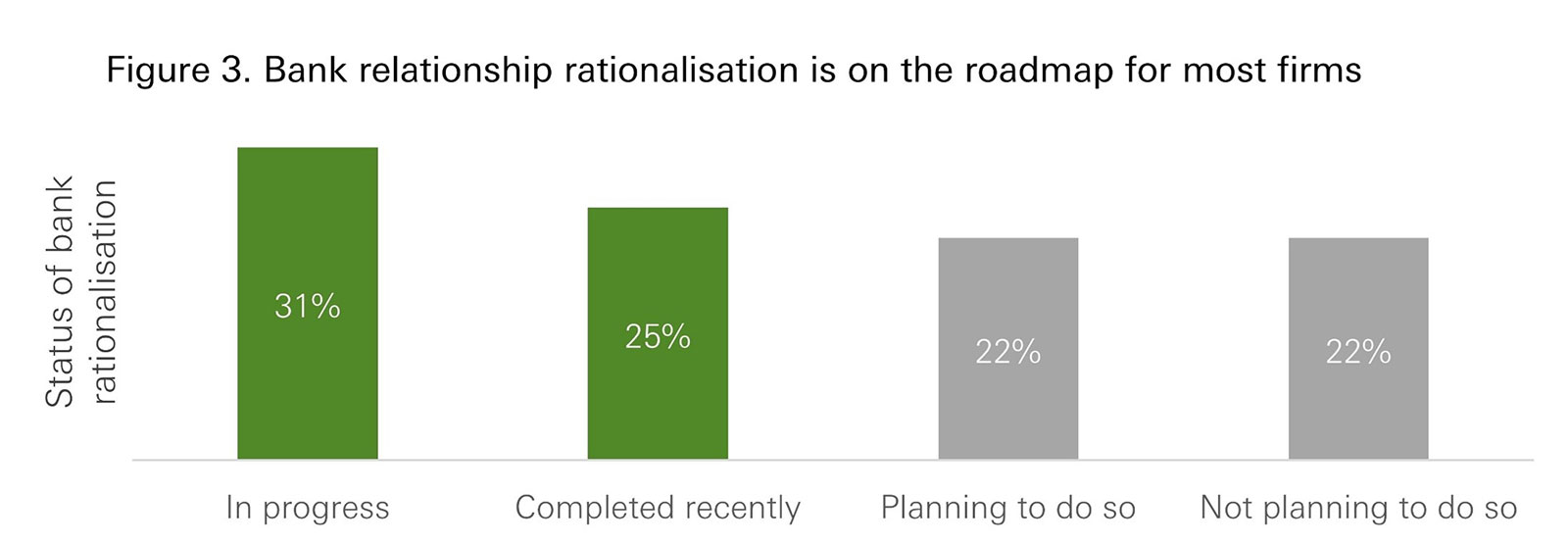
Larger, globally active firms are leading this shift. Companies with revenues above USD 2 billion, often exposed to multiple regulatory and tariff regimes, are furthest ahead in rationalisation. Centralisation enables them to respond faster to business or market shocks, turning operational discipline into resilience.
Actions for Treasury to consider
- Build and maintain a global account inventory showing all accounts, currencies, fees and usage. Review and update it at least twice a year
- Set an internal deadline to close dormant or duplicate accounts and track progress monthly
- Maintain local market intelligence, either in-house or via banking partners, to stay ahead of changes in capital controls, sanctions or FX restrictions
3. Generating capital efficiencies
With rate cycles shifting and borrowing costs volatile, treasurers are refocusing on internal liquidity. About half of respondents list reducing financing costs as a top priority, and many see in-house banks (IHBs) as the mechanism to achieve it.
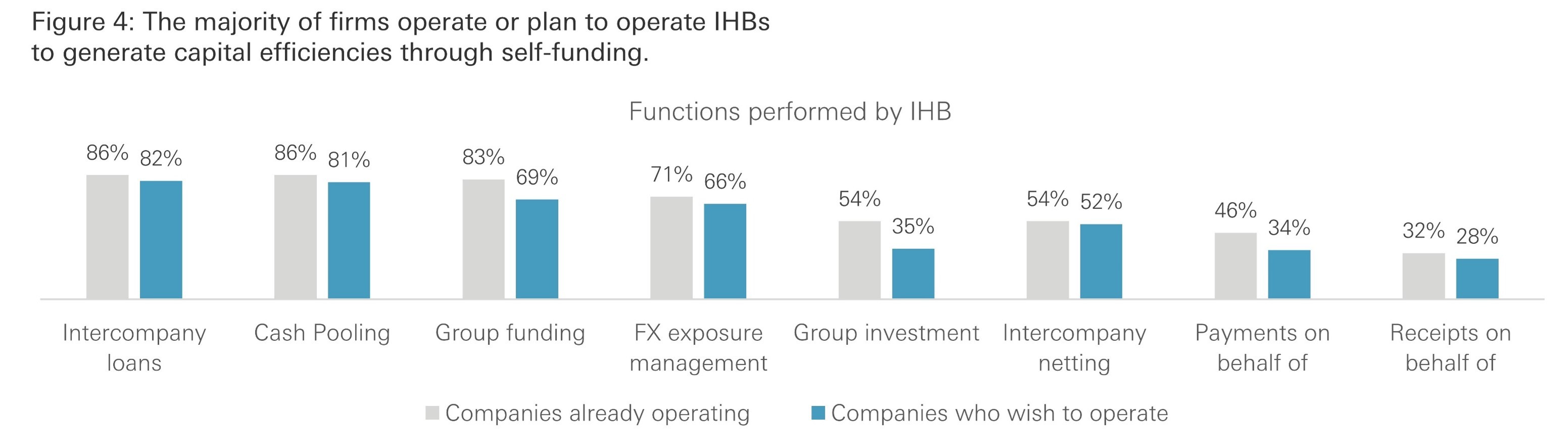
A third of corporates already operate an IHB for cash pooling, group funding and FX management, while another fifth plan to establish one. Automated pooling gives treasuries central oversight, cuts banking costs and minimises overdrafts. Businesses with automated pooling are 22 times more likely to channel investments through the treasury centre and three times more likely to fund subsidiaries internally. Reducing reliance on external financing strengthens liquidity control and frees working capital across the enterprise.
Actions for Treasury to consider
- Discuss with your banking partners opportunities for centralisation and adopting an in-house bank
- Consider automating pooling structures to enhance the visibility and control of global cash positions
4. Payments modernisation
Payments sit at the core of treasury transformation and are the most frequent touchpoint between banks and corporates. Payment efficiency and security now rank among top priorities. Features such as payment-status reporting and payee validation reduce errors and fraud risk. Over 60% of treasuries have adopted or plan to adopt these tools within two years.
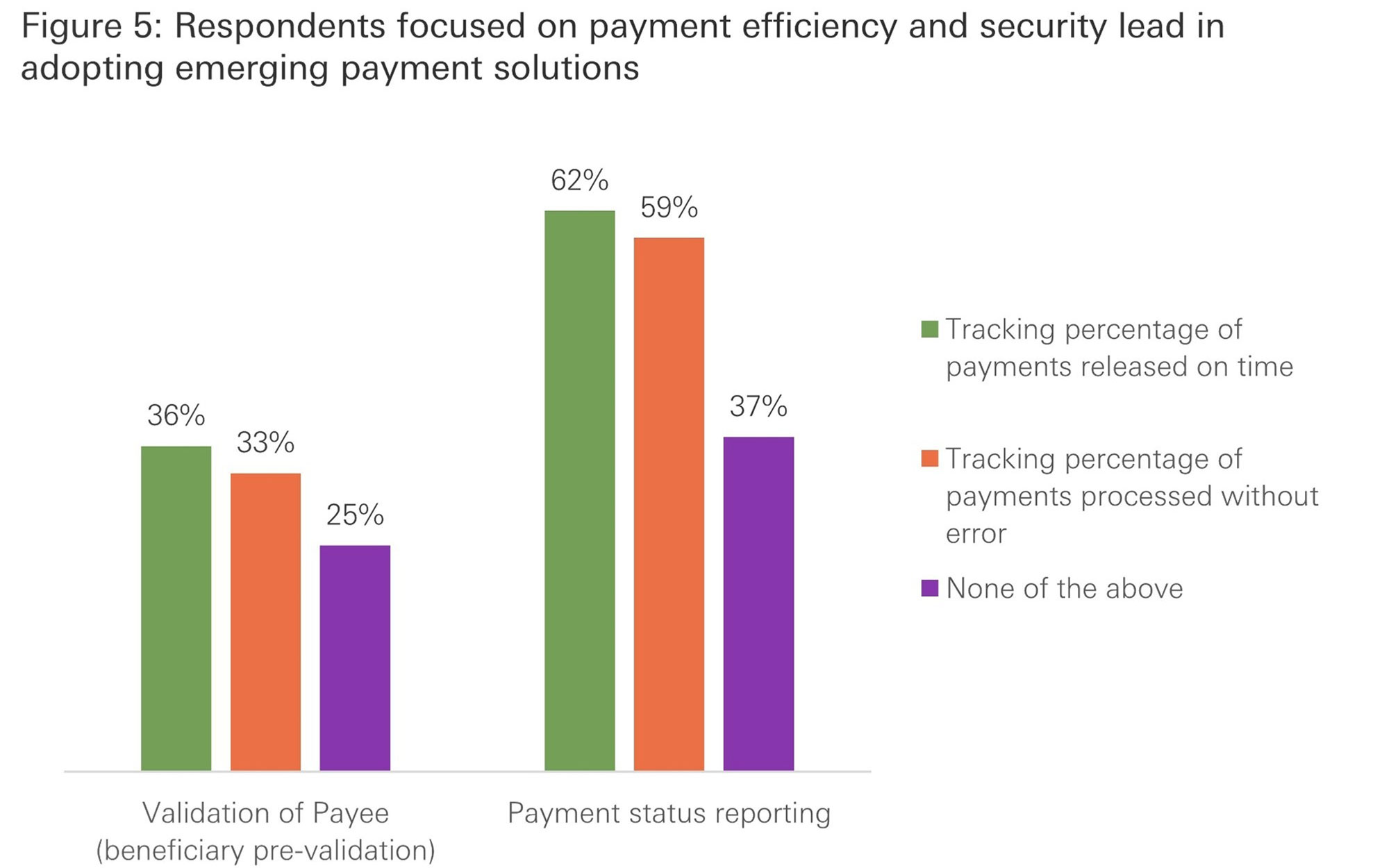
Those focused on efficiency are also advancing next-generation capabilities such as tokenisation, embedded payments and pay-into-wallet solutions, which are expected to expand fivefold over the same period. While adoption remains low today, the direction is clear: treasuries that harness payments innovation gain not only speed and transparency but also the data foundation to enhance forecasting and working-capital optimisation.
Payments Modernisation

Tokenisation enables 24/7 real-time fund transfers between and across borders and improves security by never exposing sensitive banking details.

Embedded payments integrate payment capabilities directly into business systems, such as ERPs, allowing transactions to happen without switching systems. This helps accelerate approvals and execution and strengthens cashflow visibility.

Treasuries are also leveraging APIs, blockchain and virtual accounts to streamline cross-border payments. These technologies can help deliver faster and more transparent settlement with real time visibility into FX rates and payment status.

Pay-into-wallets allow treasuries to execute faster, lower-cost disbursements while reducing reliance on cash and strengthening control over settlement processes in cross-border transactions.
AI is the next frontier. Though fewer than 30% of treasuries have implemented AI in finance, momentum is building. Over 70% of respondents believe AI could replace up to a quarter of current activities within five years, particularly in forecasting, fraud detection and liquidity modelling.
Actions for Treasury to consider
- Engage your banking partners on ISO 20022 migration: understand what additional data fields you can use to improve reconciliation and reporting
- Define and track KPIs for payment performance, such as straight-through-processing (STP) and payment repair rates
- Implement beneficiary validation tools such as HSBC’s payment pre-validation that aims to enable the verification of verify payee details prior to a payment being sent, and helping to reduce the number of payments initiated with missing, incomplete or incorrect beneficiary account and name details.
First 3 things to consider in 2026
- Proactively share operational challenges with your banking partners and explore technology or process solutions together
- Upskill treasury staff in data interpretation, model governance and digital tools such as Power BI
- Foster a culture of experimentation by piloting new technologies in sandbox environments and sharing learnings across the team
Adaptation an advantage
The picture that emerges is of a treasury that is not only becoming more strategic but learning faster, adapting its structures and insights to meet change as it happens.
Treasuries are evolving from central command posts into adaptive networks, connected to data flows, responsive to market signals and able to pivot liquidity, risk and funding strategies in near real time. The new performance benchmark is not control but capacity for change.
Efficiency and automation remain critical, but they are now enablers of agility. Lean teams that master adaptability will turn their size into strength. With fewer hierarchies and faster feedback loops, they can respond more nimbly to shifts in trade, rates or regulation. AI, meanwhile, is amplifying judgement, allowing treasurers to anticipate, simulate and act before risks crystallise.
The real transformation is not from operational to strategic but from predictive to adaptive - a treasury that thrives precisely because the future is uncertain. Those who build for adaptability will not just weather volatility, they will turn it into momentum.
In an era where uncertainty is permanent, resilience alone is not enough. The defining capability of 2026 is agility - the ability to sense, decide and move faster than the cycle itself. The adaptive treasury, data-driven, centralised and dynamically connected, will be the quiet engine of stability in a world that refuses to stand still.
Treasury Pulse Survey
The report shows how treasuries are addressing the volatile business environment and seizing opportunities for growth.

This document is issued by HSBC Bank plc (“HSBC”). HSBC does not warrant that the contents of this document are accurate, sufficient or relevant for the recipient’s purposes and HSBC gives no undertaking and is under no obligation to provide the recipient with access to any additional information or to update all or any part of the contents of this document or to correct any inaccuracies in it which may become apparent. Receipt of this document in whole or in part shall no constitute an offer, invitation or inducement to contract. The recipient is solely responsible for making its own independent appraisal of the products, services and other content referred to in this document. This document should be read in its entirety and should not be photocopied, reproduced, distributed or disclosed in whole or in part to any other person without the prior written consent of the relevant HSBC group member.
HSBC Bank plc. Registered in England and Wales (company number: 14259). Registered Office: 8 Canada Square, London, E14 5HQ. Authorised by the Prudential Regulation Authority and regulated by the Financial Conduct Authority and the Prudential Regulation Authority (Financial Services Register number: 114216). ©HSBC Group 2025. ALL RIGHTS RESERVED.